
Commercial TPO & PVC roofing in Orlando
Hot-air welded single-ply membrane systems for warehouse, retail, office, and multifamily property. Mechanically attached, fully adhered, and induction-welded — installed by in-house crews.
- Versico and Sika certified applicator
- Manufacturer warranties registered in the owner's name
- Tear-off and recover systems
- 24-hour emergency leak response
Active leak? Call Sean directly - 407-437-9477
TPO or PVC?
Both are hot-air welded single-ply thermoplastics, and both install the same way — same welder, same seam technique, same attachment options. The difference is chemical composition, and that determines which one belongs on your building.
TPO
THE DEFAULT FOR MOST COMMERCIAL ROOFS
Reflective white membrane with strong seam performance and broad manufacturer support. The cost-effective choice for warehouse, retail, office, and multifamily where there’s no chemical exposure.
- Lower material cost
- High solar reflectance
- Widest manufacturer and warranty options
PVC
WHERE THERE’S GREASE, OIL, OR CHEMICAL EXPOSURE
Plasticized membrane with chemical resistance TPO doesn’t have. Specified for restaurants, commercial kitchens, food processing, and anywhere grease-laden exhaust hits the roof.
- Resists grease, oils, and animal fats
- Proven long-term track record
- Higher material cost
If your building has a commercial kitchen or grease exhaust, PVC. Otherwise TPO is almost always the right call — and we’ll tell you if your situation is the exception.
How the membrane attaches
Three methods, and the right one depends on your building — not on what's easiest to install.
Mechanically attached
Membrane fastened through to the deck along seam lines. Fastest and most cost-effective, and the common choice for retrofits on sound decks.
Fully adhered
Membrane bonded across the entire surface. Better wind uplift performance, quieter under rain, and the choice where the roof is highly visible or wind exposure is high.
Induction welded
Plates fastened to the deck, membrane welded to the plates from above. No fasteners through the membrane, strong uplift numbers, and a clean finished surface.
Tear-off or recover?
Recovering over an existing roof is cheaper and faster. It’s also a one-time option — code limits you to two roof systems on a building — and it only works if what’s underneath is dry.
Recover works when
- Existing assembly is dry, verified by core samples
- Only one roof system currently in place
- Deck is structurally sound
- You need to reduce cost or avoid disruption
Tear-off is necessary when
- Insulation is saturated
- Two systems are already in place
- Deck repair is needed
- The existing surface won't support a new system
We take core samples before recommending either. Recovering over wet insulation traps the problem and shortens the life of the roof you just paid for.
Manufacturer warranties
We’re certified with Versico and Sika, which means manufacturer-backed warranties on single-ply systems — registered in the owner’s name at close-out, not ours.
NDL (no dollar limit) coverage is available on qualifying systems. We’ll tell you which options apply to your roof before you sign anything.
WORTH KNOWING
Most manufacturer warranties require documented maintenance to stay valid. A lot of owners find that out when they file a claim and it’s denied. We can handle that documentation as part of a maintenance program.
Where we install single-ply
TPO and PVC cover most of the low-slope commercial stock in Central Florida.
Industrial & warehouse
Large-area membrane over open deck. Mechanically attached and induction-welded systems.
Retail & shopping centers
Multi-tenant roofs with heavy penetration counts. PVC where restaurant exhaust is present.
Office & medical office
Low-disruption scheduling and clean detailing around rooftop mechanical.
Self-storage
Multi-building sites, sequenced so tenant access stays open throughout.
Common questions
What's the difference between TPO and PVC?
Both are hot-air welded single-ply thermoplastics, and they install essentially identically — same welder, same seam technique, same attachment options. The difference is chemical composition. PVC contains plasticizers that give it resistance to grease, oils, and animal fats, which is why it’s specified for restaurants, commercial kitchens, and food processing. TPO doesn’t have that resistance, but it costs less and has broader manufacturer support. For most commercial buildings without chemical exposure, TPO is the right call.
How long does a TPO roof last in Florida?
A properly installed 60-mil system typically runs 20–25 years in Central Florida. UV exposure and heat are the main stressors here, and membrane thickness matters more than it does in cooler climates — thinner membranes weather faster. Documented maintenance also makes a real difference, both to actual service life and to keeping the manufacturer warranty valid.
Can you install over our existing roof?
Sometimes. Recovering is cheaper and faster, but it only works if what’s underneath is dry and there’s only one roof system currently in place — code limits you to two. We take core samples before recommending it. Recovering over saturated insulation traps the problem and shortens the life of the roof you just paid for, so if the assembly is wet we’ll tell you tear-off is the only honest option.
What membrane thickness should we specify?
Sixty mil is the standard for most commercial applications and what we’d recommend in Florida’s UV conditions. Forty-five mil costs less but weathers faster here. Eighty mil is worth considering for high-traffic roofs, buildings with heavy rooftop mechanical, or anywhere the roof gets walked regularly for service. We’ll make a recommendation based on your building rather than defaulting to the cheapest option.
What is an NDL warranty?
No dollar limit. A standard manufacturer warranty caps what they’ll pay to fix a covered failure. An NDL warranty doesn’t — the manufacturer covers the full cost of repair regardless of what it runs. They’re only available through certified applicators on qualifying systems, and they typically require specific materials and installation details throughout. We’ll tell you up front whether your roof qualifies and what it would take.
Does a white roof actually reduce cooling costs?
Yes, though how much depends on your building. A reflective membrane lowers rooftop surface temperature significantly, which reduces heat load into the space below. Buildings with limited insulation above the ceiling see the biggest difference. It’s a real benefit in Florida, but it shouldn’t be the only reason you pick a system — attachment method and thickness matter more to how long the roof lasts.
Will a repair void our manufacturer warranty?
It can. Most manufacturer warranties require that repairs be performed by a certified applicator using approved materials and details. A handyman patch or an uncertified contractor’s repair can void coverage entirely, and owners usually find that out when they file a claim. If your roof is under warranty, tell us who the manufacturer is and we’ll confirm what’s permitted before we touch it.
Can you work while the building is occupied?
Yes — most of our commercial work is on occupied property. We plan staging, crane picks, and access with you before we start, and we can sequence around business hours, deliveries, or tenant operations. Odor is worth mentioning: adhesives used in fully adhered systems have a smell, so on medical or office buildings we’ll discuss scheduling or attachment method accordingly.
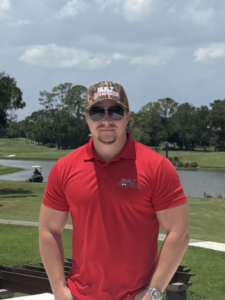
Your commercial contact
Sean McCoy - Commercial Division
I handle commercial roofing for Built Roofing across Central Florida. If you manage property in the area, I’m happy to walk your roof and put together a condition report — whether or not you’re planning work this year. Most of what I do is helping property managers and association boards understand what they’re actually looking at, before it turns into an emergency.
- (407)-437-9477
- [email protected]
- Connect on LinkedIn
Start with a roof condition report
We’ll assess every building in your community, document what we find, and give your board a plan it can actually budget against. No cost, and the report is yours either way.
Or call Sean directly — 407-437-9477